
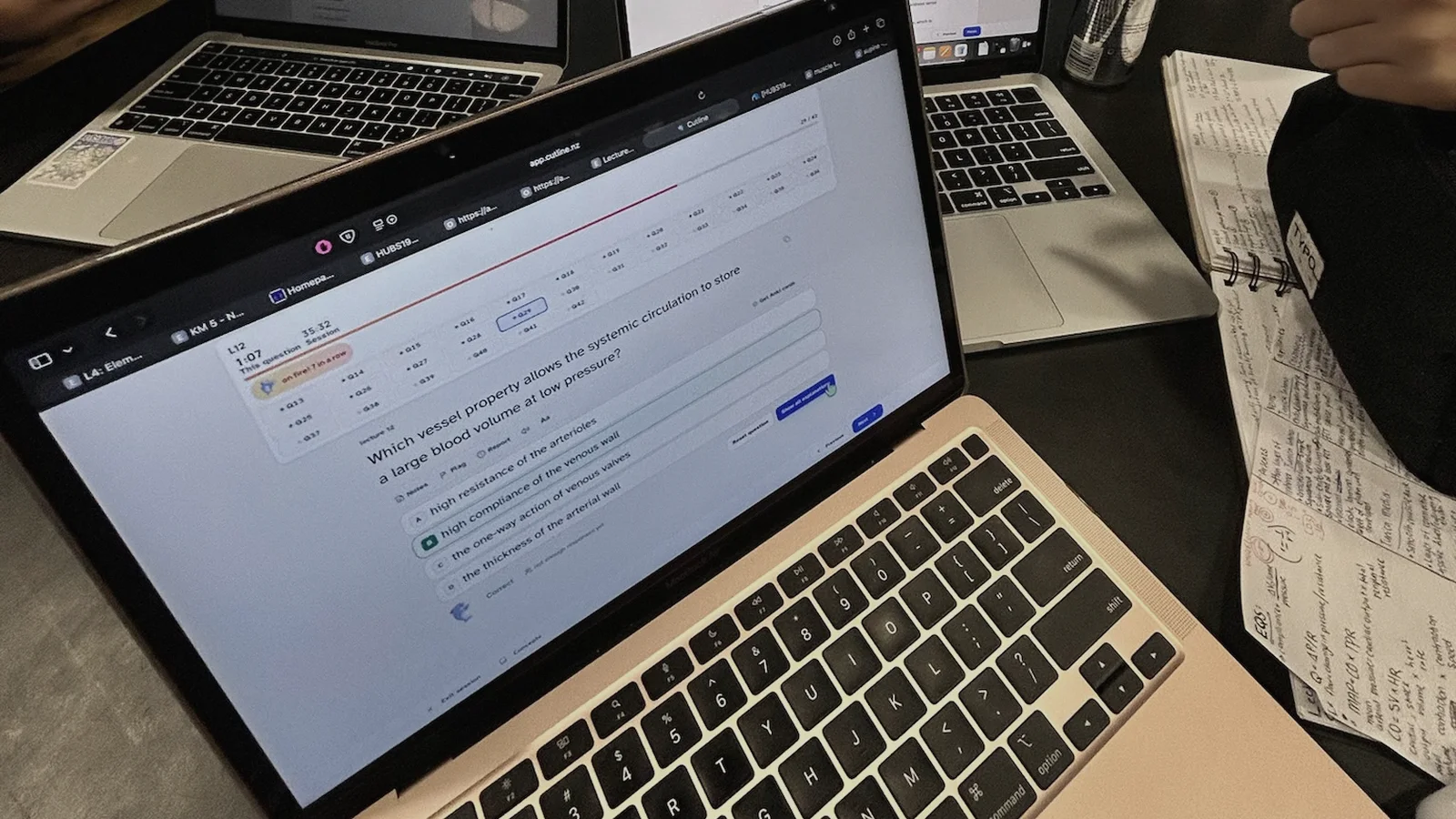
Studying for multi-choice is different from studying for an essay or short-answer exam. It rewards fast recognition, discipline around distractors, and enough mixed practice that identifying the question type becomes automatic. Most HSFY marks are multi-choice, so this is the skill to train.
What multi-choice tests
Three things at once:
- Recognition under time. You have roughly a minute or two per question, so hesitation is expensive.
- Discrimination between close options. The wrong answers are not random. They are written to be attractive to someone with a partial understanding.
- Type identification. The stem does not tell you which concept it is testing. Working that out is half the question.
How to practise for each
For speed: volume, and there's no shortcut. Do enough questions that reading a stem and knowing what's being asked stops taking conscious effort.
For distractors: when you get one wrong, do more than note the right answer. Work out why the wrong one was attractive. That is the misconception the examiner was fishing for, and it is usually a real gap in your understanding rather than carelessness.
For type identification: mix your practice. Doing thirty questions from one topic teaches you to solve that topic when you already know that is what it is. Mixing types forces you to identify before you solve, which is the exam task. Interleaving reliably beats blocked practice on later tests (Rohrer & Taylor, 2007; Brunmair & Richter, 2019).
Exam-room rules that save marks
- Do not change an answer you were confident about unless you have found a concrete reason. Second-guessing under pressure costs more marks than it saves.
- Answer everything. There is no negative marking, so a blank is a guaranteed zero and a guess is not.
- Eliminate first. Ruling out two options turns a one-in-five into a one-in-three even when you are unsure.
- Watch the qualifiers. Always, never, only, and best are doing work in the sentence. Misreading one is the single most common avoidable error.
- Do not camp on a question. Flag and move. The last easy question you never reached is worth the same as the hard one you agonised over.
What not to do
Do not prepare for a multi-choice exam by rereading notes until they feel familiar. Recognition of your own notes is not the same as discrimination between five expertly-written options. The only preparation that transfers is doing questions.
Cutline is built around this, with exam-style MCQs and worked answers for CHEM191, HUBS191, CELS191 and PHSI191, free to start.