
HSFY blog
BlogHSFY
Papers, exams and getting through first year at Otago.
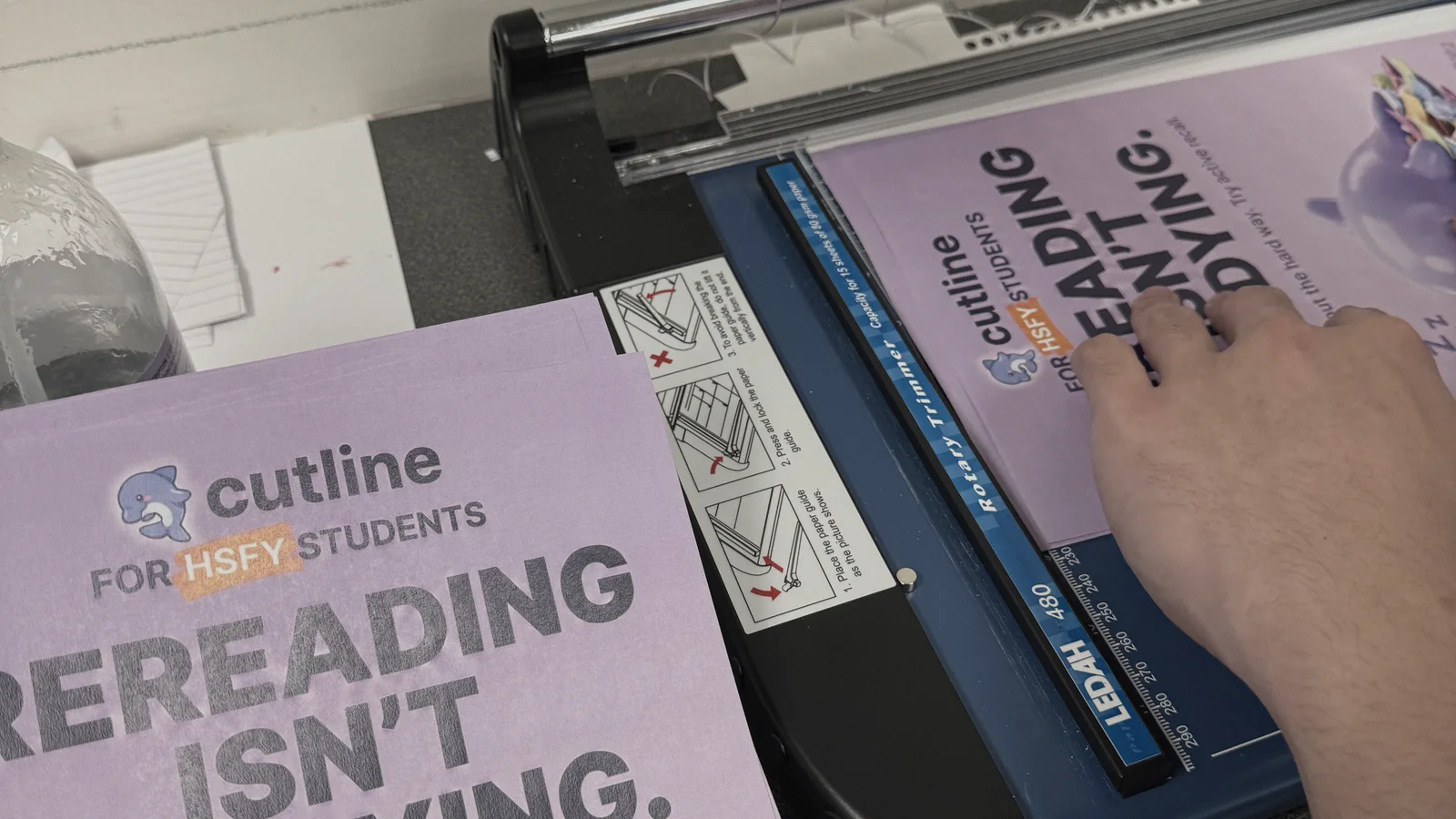
The Cutline Method
The exact weekly loop the students who built Cutline used to make the cutline: lectures, the QBank, reviews, Anki export, and flashcards run as one system.
3 min read- Admissions
Otago vs Auckland: Which Med School Route Suits You?
Otago ranks you on marks alone. Auckland, from 2028, ranks you on an MMI and Casper with GPA as a threshold. The two routes compared honestly.
6 min read - Admissions
Otago Medical School Acceptance Rate (2022 to 2026)
Otago admitted 347 of 1,141 medicine applicants for 2026, about 30 percent. The five year series, the offer scores, and why the general pathway is worse.
11 min read - Admissions
How to Get Into Dentistry in New Zealand (2027)
Otago dropped UCAT for dentistry in 2024. Here is what counts now: the 65% average, the 60% floor, the interview, and real entry scores.
8 min read - First year
What Is Health Sciences First Year at Otago?
The seven papers, the eighth paper, the thresholds for all five programmes and the rules that catch people out. By Otago students who did it.
8 min read  POPH192
What halving your risk means
A treatment that halves a risk of two in a million has done almost nothing. The same words on a common outcome are enormous news. Health reporting prints the number that cannot tell the two apart.
5 min read- POPH192
Why a treatment that saves lives makes a disease look more common
Cases at a record high can be true at the same moment a disease is getting rarer, and a treatment that works pushes the number of people living with a disease up rather than down. One picture explains both.
5 min read - POPH192
How to tell whether a health study proves anything
Coffee prevents dementia, says the headline. Whether that means anything at all depends on how the study was built, and there are only five ways to build one.
6 min read - POPH192
Before you do the maths, work out what kind of study it is
Some studies cannot produce a risk at all, whatever the numbers look like. Work out who chose the denominators first, because the study design decides which numbers mean anything.
5 min read - POPH192
How to read an epidemiology graph without being fooled
Everybody reads health charts, in the news and on government dashboards, and almost everybody reads them wrong in the same few ways. Counts against rates, the gap between two lines, and who the chart leaves out.
6 min read - POPH192
How to study for POPH192 Progress Test 2
Thirty questions, forty-five minutes, lectures 14 to 22. The paper hands you the facts and asks you to work out which situation you are standing in, which is a different skill from knowing the content.
5 min read - Admissions
How to Get Into Medicine in New Zealand (2027 Entry)
Otago, Auckland and the new Waikato med school, side by side. Real entry scores from 2022 to 2026, UCAT thresholds and every date. By med students.
15 min read  MAOR102
MAOR102: how to write a strong answer rather than a definition
MAOR102 rewards applying concepts to context and connecting them, not reciting definitions. Here is what separates a passing answer from a strong one.
2 min read HUBS192
HUBS192: why most students find it easier than HUBS191
HUBS192 covers whole systems rather than scattered foundations, so the content finally links together. That makes it more learnable, if you study it as systems.
2 min read- HUBS192
How to read and label anatomy diagrams under exam pressure
Diagram questions are won before the exam, by labelling from blank. In the room, orient yourself first and answer the question that was asked.
3 min read - Study skills
A realistic weekly study timetable for HSFY
Protect sleep, move every day, and study in focused blocks at your own peak hours. Hours logged is the wrong metric, and chasing it is a common regret.
3 min read  STAT115
STAT115: how to know which statistical test to use
The hardest skill in STAT115 is not computing a test, it is choosing one. Work from your variables, not from the chapter you happen to be revising.
2 min read- POPH192
How to memorise the social determinants of health
Do not memorise the social determinants as a list. Learn them as causal pathways, because POPH192 asks you to apply them, not recite them.
2 min read  BIOC192
BIOC192: why so many students score well in it
BIOC192 has famously dense slides, but the department tells you which parts are assessed and how. Students who use that guidance properly tend to do very well.
3 min read- POPH192
Is POPH192 actually hard? An honest answer
No. POPH192 is one of the most overestimated papers in HSFY. Here is why it has that reputation, and why the fear costs students more marks than the content does.
2 min read - 8th paper
Which 8th paper should you take in HSFY?
Your eighth paper counts toward the same GPA as everything else, so pick one you can score highly in. The popular picks are MAOR102, STAT115 and MATH130.
2 min read - Exam technique
The last two weeks: how to revise when you are out of time
With two weeks left, covering everything is not on the table. Triage by what is examinable and what you cannot yet produce, and do questions, not notes.
2 min read - Wellbeing
How to survive HSFY without burning out
The most common regret is not studying too little. It is measuring study in hours, cutting out the gym and friends, and retaining less for the trouble.
3 min read - Exam technique
Interleaving: why mixing problem types beats doing a whole chapter
Blocked practice feels better and works worse. Mixing question types trains the skill the exam tests: working out what kind of problem you are looking at.
2 min read  CHEM191
How to study for the CHEM191 final exam
CHEM191 past papers are remarkably consistent, and only a handful of concepts per lecture get examined. Work backwards from the exam instead of forwards from the slides.
3 min read- Anki
How to use Anki for HSFY without wasting hours
Anki works because of the spacing effect, but most students break it by making beautiful cards, cramming reviews, and carding things that should be practised instead.
2 min read  PHSI191
PHSI191: how to get through a 55-question physics exam
The PHSI191 final is 55 multi-choice questions in three hours, and past papers repeat their structure. Train fluency, not memorisation, and use plussage properly.
2 min read- First year
How hard is HSFY really?
The content is not the hard part. The hard part is that HSFY is a ranking contest against 2,000 people, some of whom have done it before.
2 min read - Exam technique
How to study for a multiple-choice exam
Multi-choice is a different skill from writing answers. It rewards recognition speed, distractor discipline, and mixed practice, not more rereading.
2 min read - Study skills
What med and dent students regret about HSFY
The regrets are rarely about content. They are about fearing the wrong paper, mistaking hours for learning, and studying yourself into isolation.
3 min read  HUBS191
How to pass HUBS191: what gets tested
HUBS191 is a knowledge-gap paper with deliberately fiddly MCQs. The trick is finding your gaps early and not talking yourself out of correct answers.
2 min read- PHSI191
How plussage works at Otago, and how to use it strategically
Plussage means a strong final exam can overwrite a weak progress test mark. Used deliberately, it tells you which progress test to prioritise when two collide.
2 min read  CELS191
How to revise for the CELS191 progress test
The CELS191 progress test covers a defined slice of lectures and is worth 20 percent. That makes it the most scopeable assessment in the paper.
3 min read- CHEM191
How to draw CHEM191 organic mechanisms from memory
Mechanisms are the part of CHEM191 that rewards practice most and crams worst. Reproduce them from a blank page rather than reading worked examples.
2 min read - Study skills
Why rereading your notes does not work
Rereading builds a feeling of familiarity that your brain mistakes for knowing. Retrieval practice feels worse and works far better. Here is how to switch.
3 min read - CELS191
CELS191 genetics: how to tell which problem type you are looking at
Most CELS191 genetics marks are lost by solving the wrong kind of problem. Learn the tells that distinguish a cross, a linkage question and Hardy-Weinberg.
3 min read - Dent entry
What GPA do you need to get into Dentistry at Otago?
Otago Dentistry has become sharply more competitive: applications nearly doubled between 2022 and 2026, and the GPA range has tightened to the high 90s. Here are the real numbers.
2 min read - Med entry
What GPA do you need to get into Medicine at Otago?
For the General category, successful Otago Medicine applicants have sat roughly between 89 and 99 GPA since 2022. Here are the real ranges and admission numbers, year by year.
2 min read - Exam technique
How to use past papers properly
Past papers are a map of what gets examined. Use them in week three rather than week thirteen, and attempt before you read.
2 min read - Exam technique
Why you cannot find HSFY past MCQs (and what to do about it)
HUBS, CELS and BIOC are examined largely by multiple choice, but the MCQ sections are never released. Only the written questions are. Here is why, and how to practise anyway.
3 min read - Exam technique
How to learn from the questions you got wrong
Reading the correct answer teaches you almost nothing. The learning is in diagnosing why the wrong option was attractive to you.
2 min read - Labs
What to bring to a HSFY lab
Closed-toe shoes, hair tied back, and the pre-lab read. You do not need to bring safety glasses. Here is the real kit list and the assessment detail people forget.
4 min read - Exam technique
What to do if you fail a HSFY progress test
A failed progress test is usually recoverable, and in papers with plussage it can be erased completely. Here is how to work out how bad it is.
3 min read - First year
First year at Otago: what nobody tells you about HSFY
HSFY is a ranking contest, not a pass-fail year, the starting line is uneven, and the study method that got you through NCEA will not hold. Here is the honest briefing.
3 min read
Every HSFY lecture, as exam questions. Free to start.