Your child is heading into Health Sciences First Year at Otago, or is in it now. Cutline is the practice app HSFY students use all year. There is also a summer programme for Year 13s.
Cutline is built by Otago medicine and dentistry students. Cutline operates independently and is not affiliated with, employed by, or endorsed by the University of Otago.
Health Sciences First Year is the first year at Otago for students aiming at health courses. Medicine and dentistry are the best known of them. Entry is decided mainly by first year grades, and places are limited. The line between an offer and no offer is called the cutline. That is where our name comes from.
1,141 applied.347 got in.
Each dot is one applicant to Medicine for 2026 entry, and the blue ones received an offer. In Dentistry the same year, 1,032 applied and 101 were admitted. University of Otago, Admissions Statistics 2026.
The shape of the year
FebruarySemester one beginsCHEM191CELS191HUBS191PHSI191
Four papers run together from the first week.
Mid-semesterProgress tests and lab assessments
In some papers a stronger exam mark can replace a weaker progress test mark. Each course outline says if that applies this year.
The totals cover all three admission categories, of which the first year is one.
Within those totals, the reports break the first-year category down by admission pathway. Offers of admission to first-year applicants, for 2026 entry:
Pathway
Medicine
Dentistry
General
118
30
Māori
66
24
Rural
32
7
Refugee
15
5
Socio-economic equity
11
5
Indigenous Pacific
10
6
International
34
23
In 2026, first-year General pathway offers in Medicine went to average academic scores between 93.14 and 99.00. In Dentistry the range was 97.00 to 98.57. Other admission pathways have their own score ranges.
The university’s own caveat applies here: the information in these reports is historical and not indicative of outcomes in future years.
Source: University of Otago, Admissions Statistics 2026 reports for Medicine (MB ChB) and Dentistry (BDS), April 2026, published at otago.ac.nz.
Scores to receive an offer, 2022 to 2025
These are the scores of students who received an offer, over the four years the university has released.
Medicine (MB ChB): score ranges by pathway
Range of average academic scores to receive an offer of admission to the MB ChB programme via the first-year (HSFY) category, 2022 to 2025, as the university released it.
2022
2023
2024
2025
General
93.00 to 99.14
89.43 to 98.43
89.57 to 98.71(95.43*)
89.29 to 99.00(90.86*)
Māori
69.14 to 98.71
70.29 to 97.00
65.29 to 97.00
65.71 to 95.43
Indigenous Pacific
69.57 to 88.29
67.43 to 82.71
65.43 to 96.57
65.71 to 92.86
Socio-economic equity
73.29 to 91.57
71.57 to 92.00
71.57 to 91.00
<5
Refugee
74.71 to 92.71
73.86 to 92.86
71.43 to 95.29
70.29 to 91.29
Rural
86.00 to 97.86
78.29 to 97.14
79.71 to 91.29
66.14 to 97.29
International
72.71 to 95.29
80.43 to 92.99
76.29 to 97.00(84.29*)
69.43 to 94.71
* Non-waiting list minimum score.
Dentistry (BDS): score ranges by pathway
Range of average academic scores to receive an offer of admission to the BDS programme via the first-year (HSFY) category, 2022 to 2025, as the university released it.
2022
2023
2024
2025
General
88.71 to 98.71
87.00 to 98.00
90.14 to 97.71(90.14*)
96.14 to 98.86(97.00*)
Māori
70.14 to 96.43
71.29 to 87.57
70.86 to 88.87
69.00 to 95.43(<5*)
Indigenous Pacific
72.14 to 88.29
73.43 to 82.71
66.43 to 90.57
75.14 to 92.86(<5*)
Socio-economic equity
<5
<5
<5
<5
Refugee
74.71 to 92.71
77.43 to 92.86
75.14 to 95.29
80.71 to 97.86(<5*)
Rural
81.43 to 97.14
76.14 to 97.14
81.29 to 96.71
82.57 to 97.86(91.86*)
International
67.14 to 91.57
72.14 to 92.14
73.57 to 96.14
69.00 to 91.00(81.43*)
* Non-waiting list minimum score.
Each pathway is its own route with its own entry criteria, so the rows are not one ranked scale. The university’s admissions policy for these programmes promotes and facilitates equity for students from underrepresented priority groups: Māori, Pacific, rural, socio-economic and refugee background students.
A bracketed figure with an asterisk is the non-waiting list minimum: the lowest score to receive an offer that did not come from the waiting list. The university holds that detail for 2024 and 2025 only. Where it would describe fewer than five people it is withheld too, shown as (<5*).
Two markers are the university’s own. <5 means the figure would describe fewer than five people, so it was withheld to protect their privacy. N/A means no offers were made. Neither is a score.
Source: University of Otago, response under the Official Information Act 1982 to request 34087, dated 14 April 2026, released at fyi.org.nz. The university states the data is correct as at 14 July 2025. The release covers 2022 to 2025 only: the university declined the 2026 part of the request because that information was not yet held, so the 2026 figures above come from the separate Admissions Statistics 2026 reports.
What Cutline does about it
Your child studies the lecture, then trains on it here the same day. Try the question. It is a real one from the HUBS192 bank, and what you see after answering is exactly what your child sees.
Kept in step with this year’s lecturesOur medicine and dentistry students work closely with the current 2026 HSFY cohort, so each lecture’s worksheet goes out on time and matches what was taught this year rather than last year’s slides.
Exam-style practice, organised by lectureEach paper page lists what is published, in the order it is taught.
An explanation for every optionNot only the right one. The wrong options are where the marks are lost.
Review that returns what they got wrongJust before it is forgotten, so weak topics get the study time.
Mock exams, and a Discord that answersRecent medicine and dentistry students answer questions there.
Which of the following features is common to both myoglobin and adult haemoglobin?
Tap an option to answer.
Rebuilt here to match the app rather than screenshotted from it. The question, the options and every explanation are from the live HUBS192 bank. Open the HUBS192 sample page
Results you can check
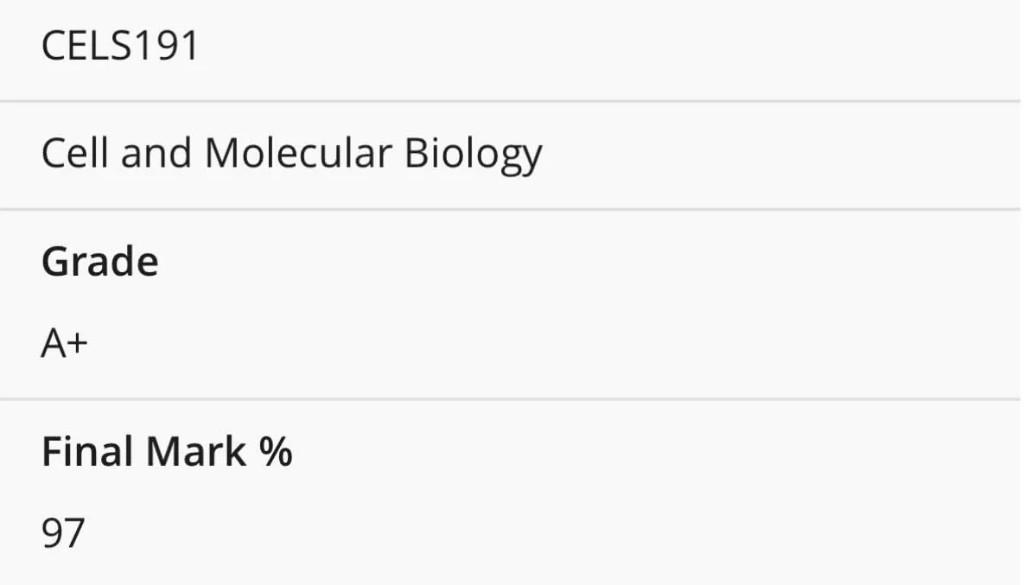
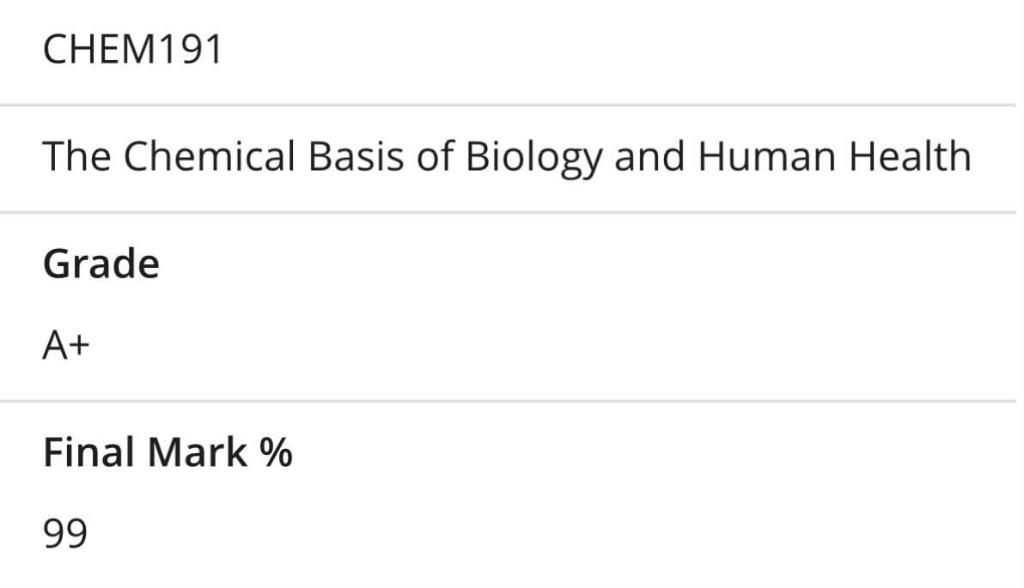
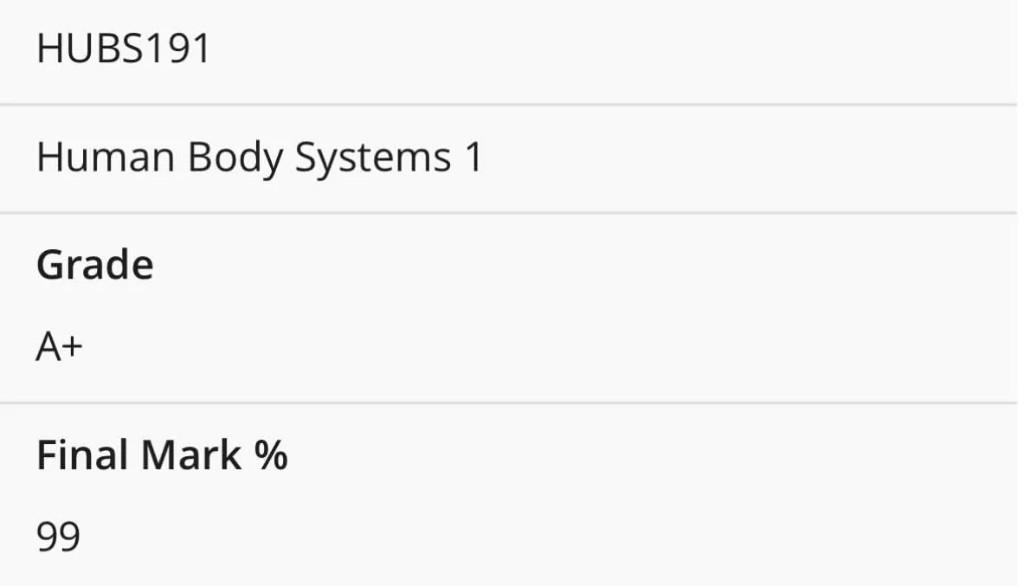
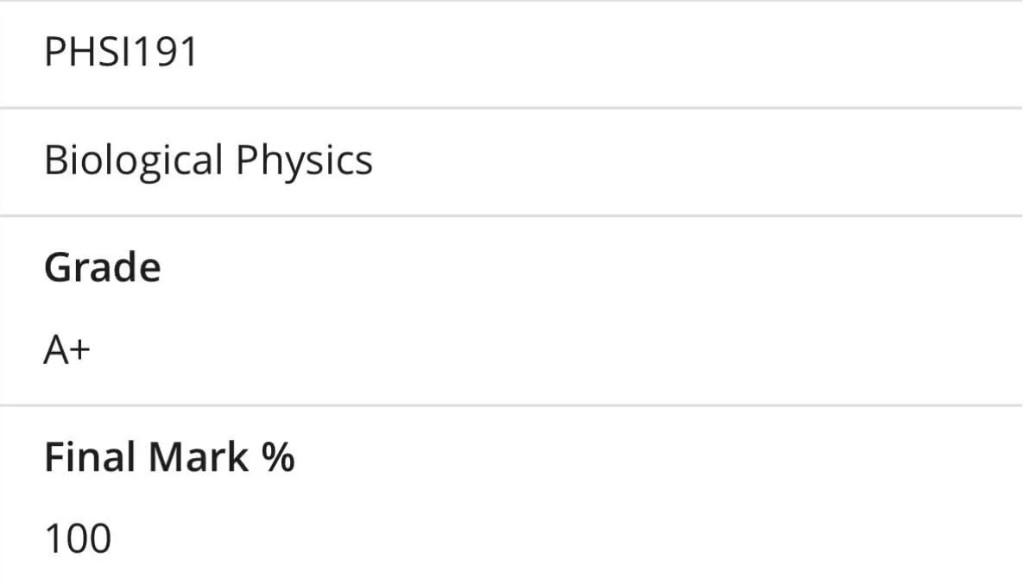
These are final semester one marks from four Cutline students. They are cropped from eVision, the university's own records system. Each student gave permission for us to share them.
CELS191A+ 97CHEM191A+ 99HUBS191A+ 99PHSI191A+ 100
800+HSFY students helped in 2026
These are individual results and not representative of general outcomes. They are not a promise. The work still has to be your child’s.
What it costs, next to what the year costs
HSFY is a year most students only sit once. It is worth seeing the price of Cutline beside the price of the year it sits inside.
NZ$499
Semester 2 Pass, to the November exams. About 2% of what the year costs.
$10,159
Domestic tuition for a full-time year of health sciences papers, at 2026 rates. The Student Services Fee is on top.
$21,470
A year in a University residential college, standard room, 2026 contract.
Both figures are the University of Otago’s own, published at otago.ac.nz.
Free, to start
Start free. No card needed. 25 questions a day, shared across HSFY papers you have not bought. Resets at midnight UTC. For papers without paid access, ordinary sessions use this allowance when started, before answering. Resuming the same session uses no more. Full articles for the first 3 distinct concepts in each paper's teaching order. Upgrade for more questions and full concept access in your plan's papers.
Semester 2 Pass
NZ$499. One payment that covers everything up to the November exams. There is nothing to cancel afterwards.
Monthly
NZ$250 a month. Cancel any time, with no lock-in.
Weekly
NZ$99 a week. Cancel any time. It costs more per month than Monthly.
Payment
Payment goes through Stripe, in New Zealand dollars, and there are no extra fees on top.
Refunds
We do not refund a change of mind, beyond your rights under the Consumer Guarantees Act.
The account belongs to your child, but checkout accepts any card. You can pay together at that step.
Year 13 to HSFY 2027
If your child is still at school
Cutline Summer is a head start on the four first-semester papers, CHEM191, CELS191, HUBS191 and PHSI191, taught over the summer holidays by Otago medicine and dentistry students, before the first lecture.
It is for Year 13 students starting HSFY in 2027. If they missed Level 2 or 3 Chemistry or Physics at school, the beginner routes start from zero.
For your child: the free guide and a three-minute look at HSFY
Cutline Summer starts with a free guide, starting HSFY 2027, written for Year 13s by the students who sat the year. It takes a first name and an email, and it is written for them, not for you. Send them this address.
Ready to apply now? Apply for Cutline Summer. A person reads every application, and your child hears back by email either way.
How each paper is taught
Every paper is taught in the same three steps. This is HUBS191.
1See it firstEach body system is drawn up from scratch, diagram first.
2Link itEvery structure tied to its function, the way HSFY asks it.
3Prove itFinish on HSFY-style questions with worked answers, on the same bank HSFY students train on all year.
When
November 2026 to February 2027, over the summer break before HSFY begins.
What it costs
From NZ$699, or 3 x $233. Full refund within 14 days of paying, and applying costs nothing.
What it is not
It is not a university course and it is not a shortcut. It is the first few weeks of HSFY met early, so that February is not the first time your child sees the ideas.
Do the first module of each paper by 31 December 2026. If Summer isn't helping, tell us and get a full refund.
Plus a full refund within 14 days of paying, no questions. GST included. Three payments, 30 days apart, that stop after the third. Mentor Circle sessions already held are not refunded.
Start free, before paying anything. Your child can use Cutline properly for weeks without a card. And the honest part: no practice app does the work by itself. Cutline gives your child somewhere to practise and a clear view of what is going wrong. The studying still has to be your child’s. We do not guarantee grades, admissions, exam outcomes, or any specific result.
Questions parents ask
Can I pay for my child?
Yes. The account is your child’s, but checkout accepts any card. Many families pay together at that step.
Does my child need particular school subjects first?
No. Cutline starts from the lectures your child is studying now, and the Discord is there when they need basics or clarification.
Is this only for students already doing well?
No. It is for students who want a clear training system instead of drifting between rereading, panic and late practice.
Who answers my child’s questions?
Recent medicine and dentistry students are in the Discord support channels.
Can we cancel?
The monthly and weekly plans cancel any time, with no lock-in. The Semester 2 Pass is a one-off purchase, so there is no subscription to cancel.
Is Cutline part of the University of Otago?
No. Cutline operates independently and is not affiliated with, employed by, or endorsed by the University of Otago.
Who is behind Cutline
Cutline is built by Otago medicine and dentistry students who sat these papers themselves. The company behind it is Tie Education Ltd, a New Zealand company. Its NZBN is 9429053498052, and you can look that number up on the public register. Cutline operates independently and is not affiliated with, employed by, or endorsed by the University of Otago.
Start with the free account. It costs nothing to find out.
If Cutline is not right for your child, you have paid nothing. If it is, you will know within a few weeks, and you will hear it from your child rather than from us.