

Here is a claim that sounds like bad news and is not. The number of people living with a disease can climb year after year, reach a record, and keep climbing, at the same time as fewer people are catching it and the treatment for it is working better than it ever has. Both halves are true at once. Nothing has been fiddled.
The trouble is that two completely different questions are sharing one word. Cases.
Two questions wearing the same word
The first question is how many people have a condition right now. That is what a national health survey measures when it asks a sample of the country on a given Tuesday. It is a headcount of the people currently living with something, and epidemiologists call it prevalence.
The second question is how many people newly get it across a stretch of time. Answering that needs a group of people who do not have it and a period of watching them. It is called incidence, and it measures arrival rather than presence.
A report saying cases are at a record high almost never tells you which of the two it means, and the two can move in opposite directions at the same moment.
The tub
Picture a bathtub. The tap is new cases arriving, which is incidence. The drain is people leaving, which happens in exactly two ways, they recover or they die. The water level is how many people are living with the disease at this moment, which is prevalence.
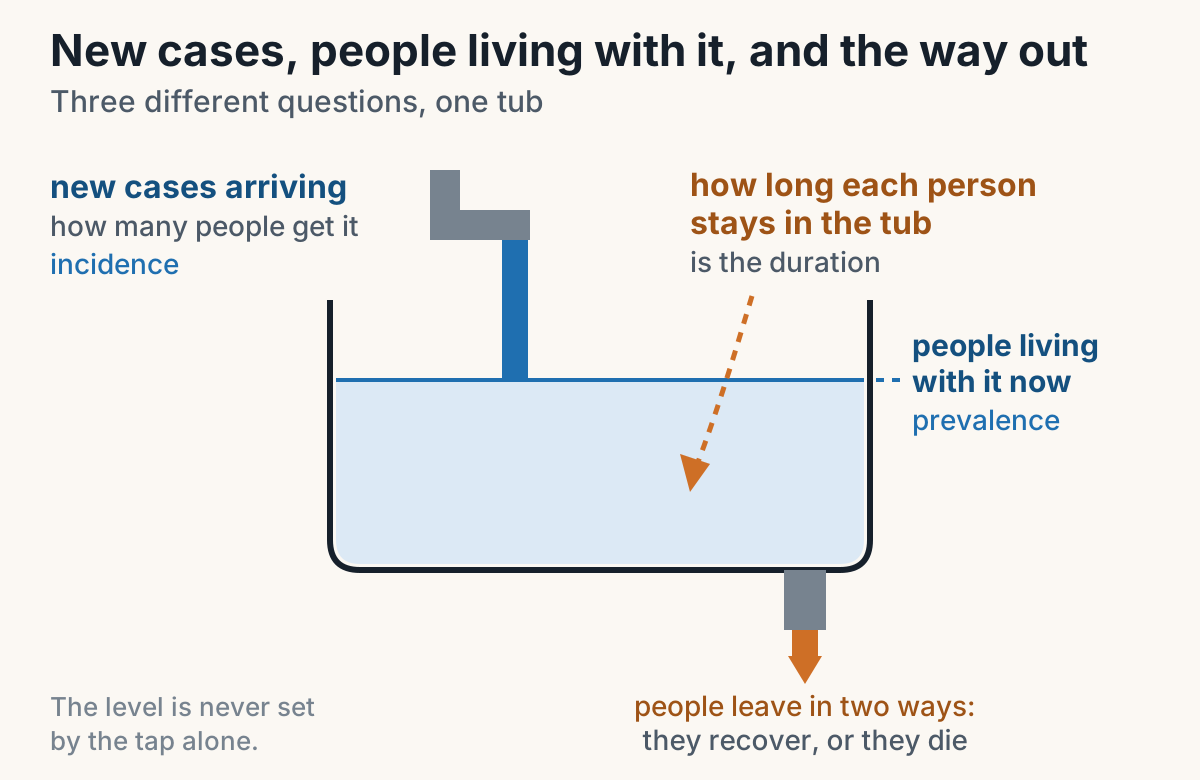
The level is not set by the tap. It is set by the tap and the drain together, or, put another way, by how many people arrive and how long each of them stays. A slow tap will still fill a tub if the drain is nearly blocked.
That is the whole relationship, and there is nothing to calculate in it. It is a way of working out which direction each thing moves when something in a population changes, which turns out to be most of what anybody needs.
Three drugs, three different tubs
Imagine a disease with no cure, in a population that is not growing or shrinking, and hand it three different drugs.
The first prolongs life without curing anybody. It does nothing to the tap, because it does not stop a single person catching the disease. It narrows the drain, because people who would have died are now alive. Everyone stays in the water far longer, cases pile up, and the level rises. This drug is unambiguously good news, and it makes the disease look more common than it was.
The second cures people quickly. Again the tap does not move, because a cure does not prevent anybody catching it. But the drain opens wide. People are in and out, the illness lasts days instead of years, and the level drops.
The third stops people getting it in the first place. Now the tap itself closes down. Fewer people arrive, so fewer people are in the tub, and the level falls. But for the unlucky few who still catch it, nothing has changed at all. The illness lasts exactly as long as it always did.
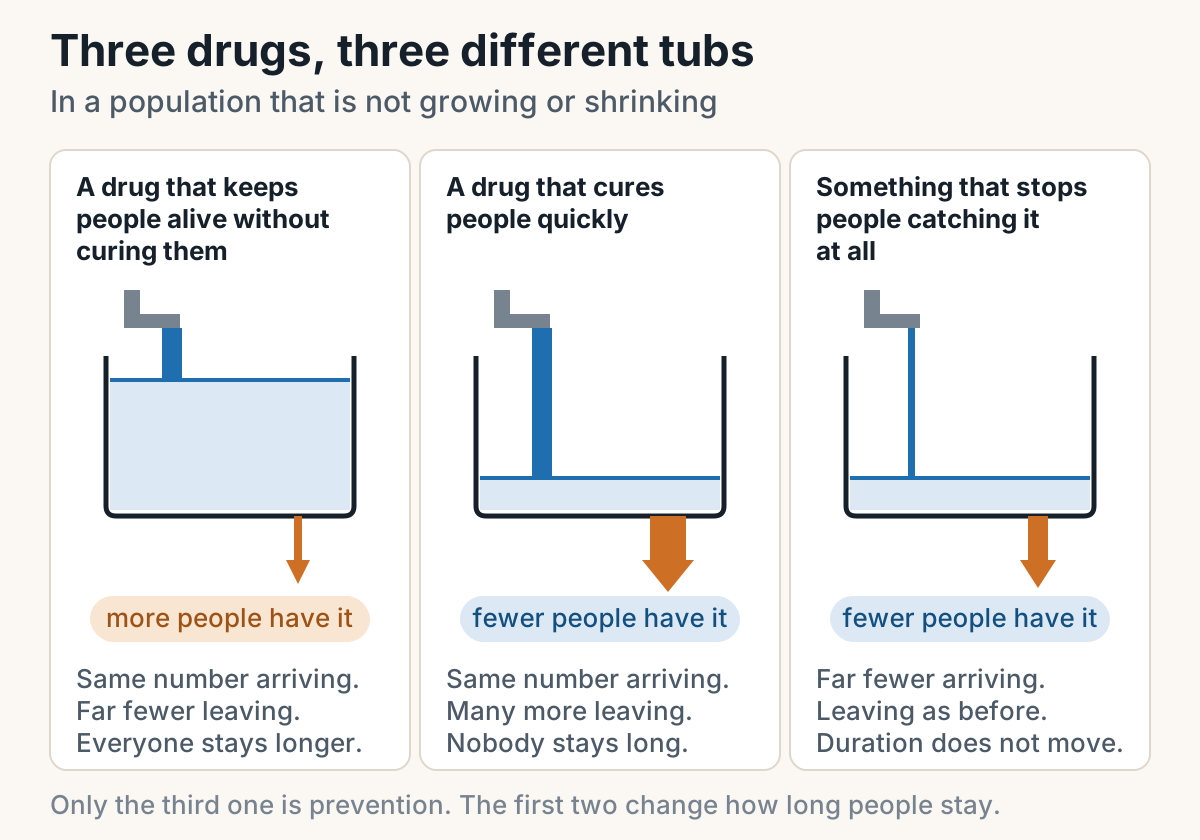
The first of those is the one that trips everybody, and it is not a trick or a technicality. It is what medical progress looks like from the outside. Any condition that used to kill people quickly and now does not will show up in the figures as more common than before, and the figures will be right. Rising prevalence, on its own, is not evidence that a population is getting sicker.
Why a record number of cases proves very little
The tub explains why the level moves. It does not explain the other half of a record-high headline, which is that a raw count of cases can climb for reasons that have nothing to do with the disease at all.
A count goes up when the population grows, because more people means more of everything. A count goes up when the population ages, because most serious diseases are commoner in older people, and a country whose median age is rising will collect more cases without any individual's risk having changed. And a count goes up when doctors get better at spotting something. Scan more people and you find more of what was already quietly there.
This is why a rate is the honest version, a count divided by the number of people it came out of, over a stated period. Two thousand cases in a city of one million and two thousand cases in a city of four million are not the same news, and a bare count never tells you which of the two you are being handed.
So which number do you actually want?
Both of them, for different jobs.
If you are working out how many hospital beds, how much medication and how many specialist appointments a country needs next year, you want prevalence, because that is a count of the people who need care right now. If you are asking whether a prevention campaign is working, you want incidence, because it is the only one of the two that can answer. A campaign that halves the number of new cases might not shift prevalence for years, because the tub is still full of everybody who arrived before it started.
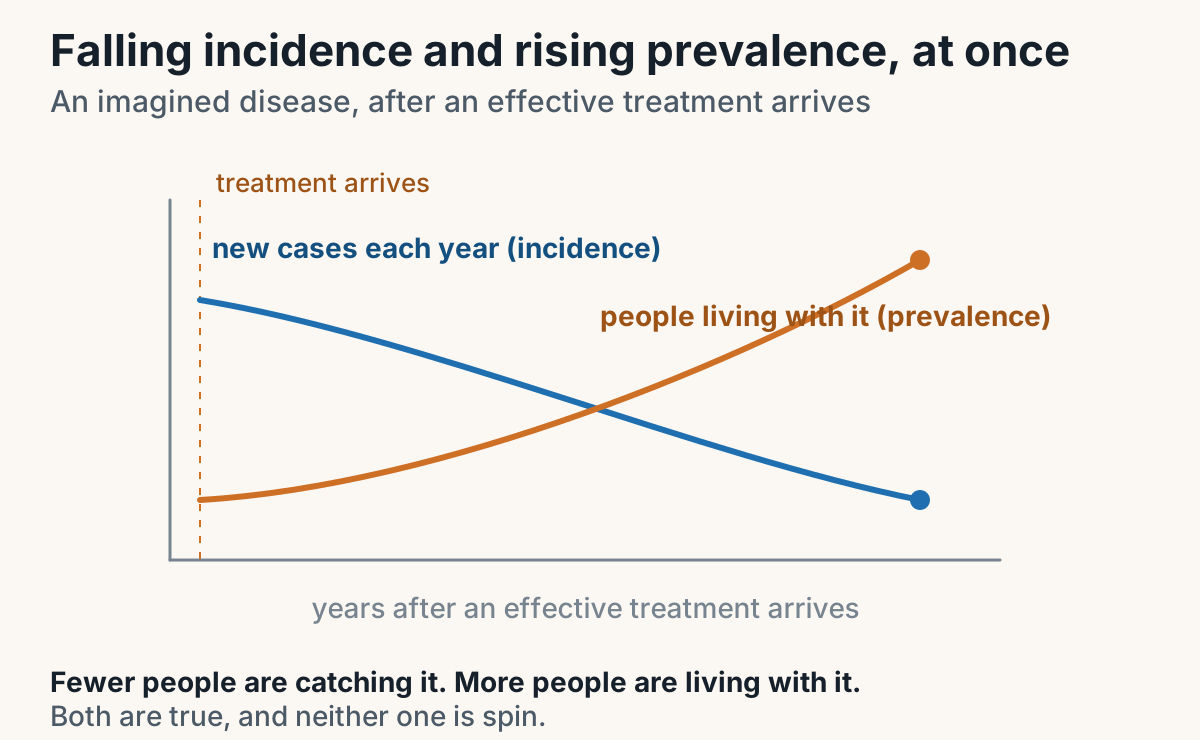
Which is the last thing the picture is good for. Falling incidence alongside rising prevalence is not a contradiction and it is not spin. It is the shape of a disease that is being caught less often and survived more often, which is close to the best news a health system can get.
It is also the most reliably misread pair of words in first-year population health. If you are sitting POPH192, Cutline's POPH192 questions will put the three-drug scenario in front of you until the direction of each arrow is automatic.