
Almost everyone who walks out of Progress Test 2 disappointed says the same thing, and most of them are telling the truth. They knew it. They could have defined every term on the list. What they could not do, in the ninety seconds the question allowed, was work out which term the question was about, because the question never used it.
That is the shape of this paper in one sentence. Thirty multiple-choice questions, forty-five minutes, lectures 14 to 22. It hands you the facts inside the question and then asks you to do something with them.
What is actually in it
Lectures 14 to 22 run in a fairly clean arc. They open with what epidemiology is for, move through the way patterns of disease shift as a country changes, and then set out the three ways of measuring how much disease a population is carrying. After that it is roughly one study design per lecture, cross-sectional and ecological together, then cohort, then case-control, then randomised controlled trials, with measures of association sitting in the middle of them and research ethics at the end.
The department publishes a preparation document with 46 practice questions in it, and that document is the most useful thing you have. Read it as a specification rather than as a worksheet. Much of it is scenario blocks, where one short paragraph carries anywhere from two to five questions. The calculation items have their options written as full sentences rather than as bare numbers. There is a run of short statements near the end that all share a single list of the five study designs.
Knowing the content is not the same as getting the mark
Here is one of those questions, lightly trimmed. A study compared 546 women who had ovarian cancer with 4,228 women who did not, living in the same areas. Of the women with cancer, 152 were using oral contraceptives, and of the women without, 1,348 were. Which measure of association can you calculate from that?
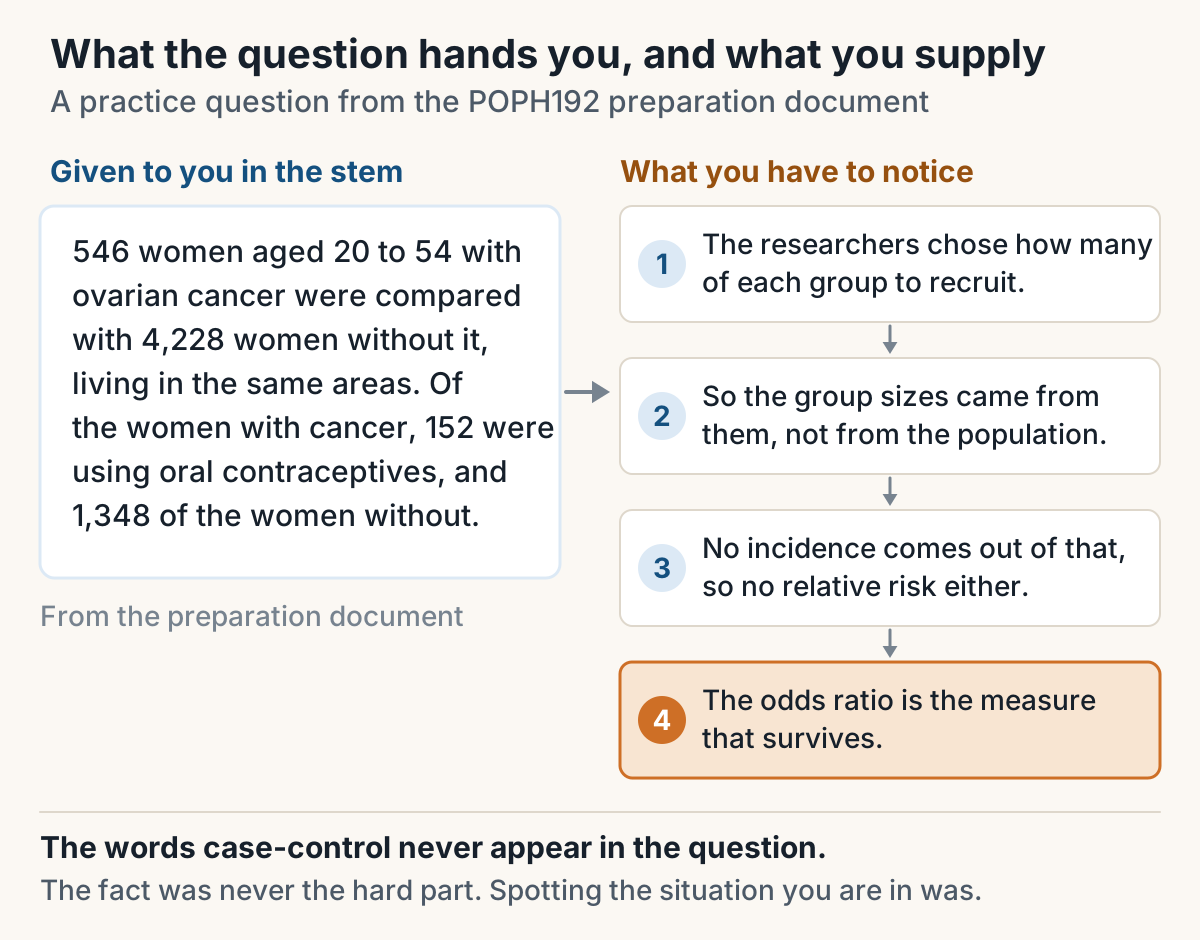
A student who has memorised that a case-control study gives you an odds ratio can still lose this mark, because the words case-control never appear anywhere in the question. What appears is a pair of group sizes, 546 and 4,228, that somebody sat down and chose. That choice is the whole answer. It is why the study cannot tell you how often ovarian cancer occurs, why relative risk is not available, and why the odds ratio is the measure left standing.
The fact was never the difficult part. Noticing which situation you were standing in was. Most of this paper behaves that way, which is why rereading the slides feels like preparation and does not act like it.
Which makes question practice the revision, not the check at the end
Reading the incidence rate slide a fourth time makes the formula feel familiar, and the paper never asks you for the formula. It asks whether this particular study produces any person-time at all. You discover that you cannot answer that only by being asked.
So questions are not the thing you do at the end to see whether you are ready. They are the studying, and everything else exists to support them.
- Work the preparation document twice. On the second pass, write one line of reasoning before you look at the options, then compare that line against the worked answer instead of comparing letters.
- Learn one grid cold. Put the five designs down the side and what each one can measure across the top. That grid is close to all the pure recall this paper rewards, and it is drawn out in before you do the maths, work out what kind of study it is.
- Run one set against the clock. Thirty questions, forty-five minutes, no pausing to check an answer. Reading a long scenario quickly is a skill of its own, and it comes apart the first time you try it under a timer.
- Say the interpretation out loud. The calculation options are written as sentences, so you have to name who is being compared with whom, and in the right order. Getting the number right and then choosing the option that puts the comparison group first loses the whole mark after the hard part was already done.
Where the time goes
Ninety seconds is an average rather than an allowance. Scenario blocks change the arithmetic, because when one paragraph serves four questions you read it once and spend what you saved on those four. The short matching items go faster still, and that is where the time for a calculation actually comes from.
What ruins that arithmetic is refusing to leave a question you cannot do.
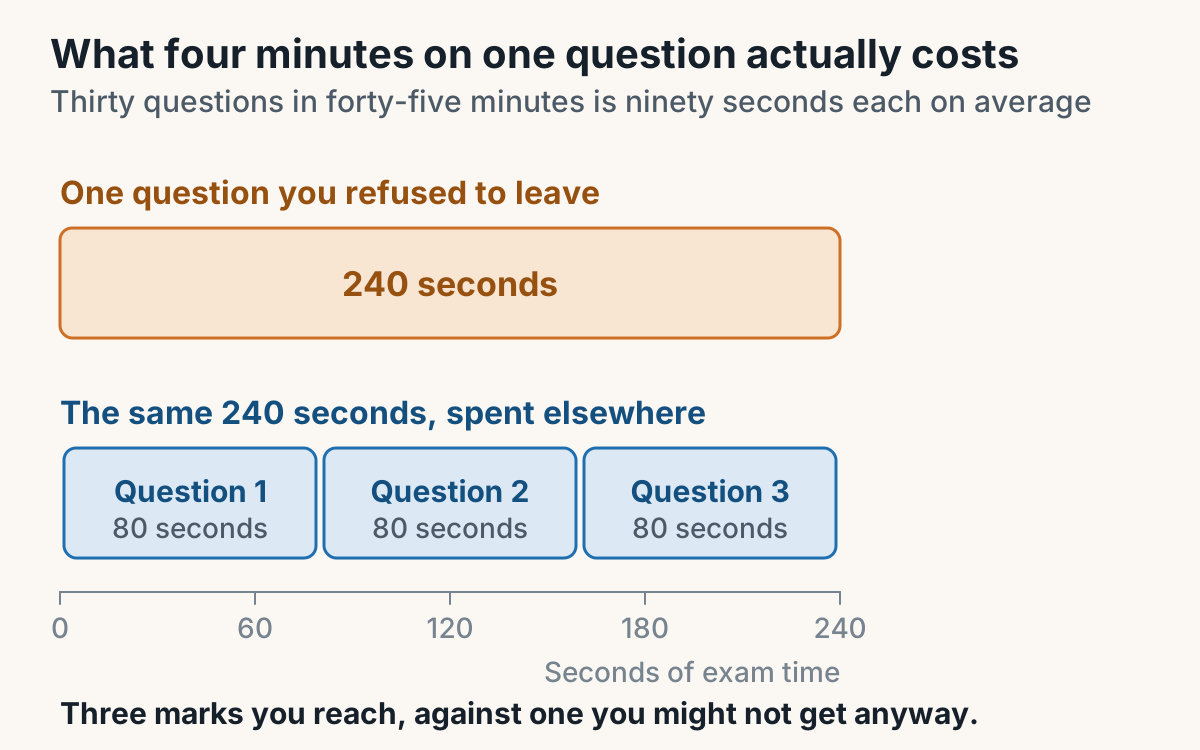
If a calculation will not come, leave it and come back. A question you skipped costs you nothing at all. A question you sat on for four minutes costs you the easy ones at the end that you never reached.
Sort your mistakes by the error, not by the lecture
Most people mark their practice and write down which questions they got wrong. That tells you very little, because a question number is not something you can practise.
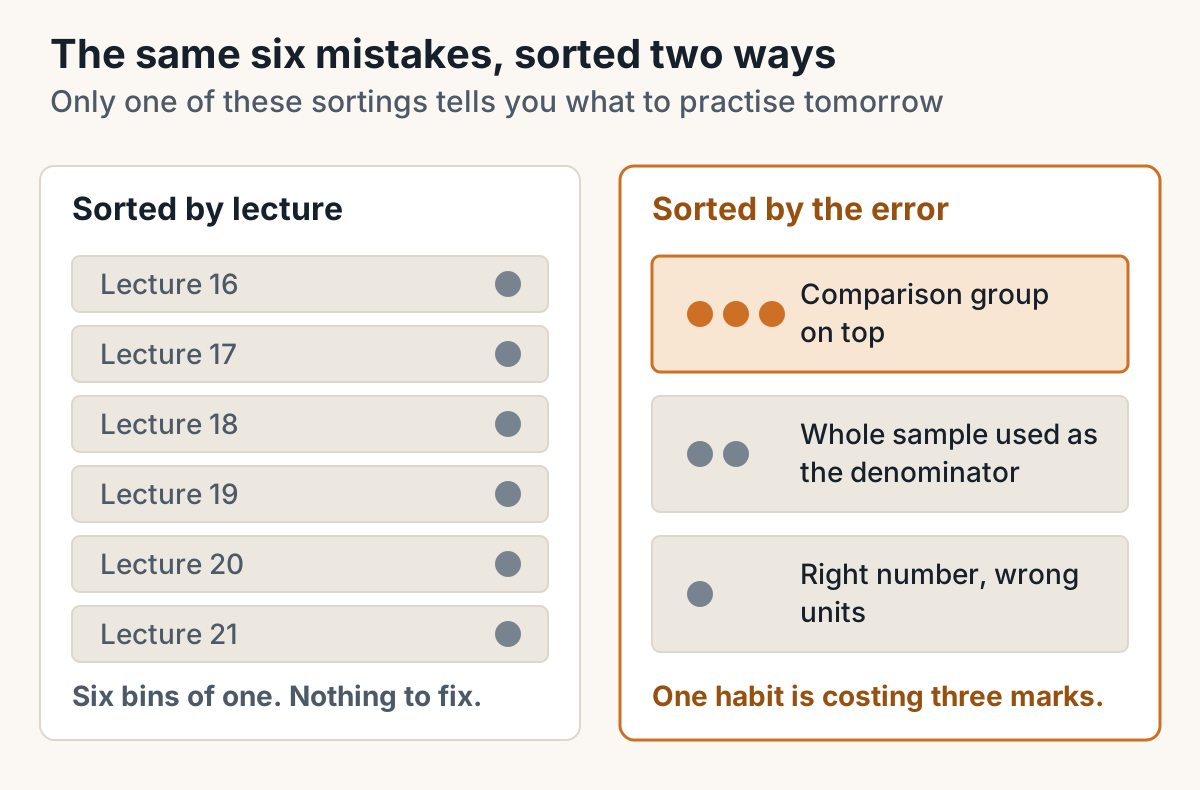
Got question 16 wrong is not information. Put the comparison group on top is information, because that error will come back at you in a different disease with different numbers, and once you have named it you can watch for it.
The last few days
Stop adding content. If a lecture feels shaky, do questions on it rather than rewatching it, because the questions will show you which specific part is shaky and the rewatch will not.
Give the final sessions to the three things that carry the most marks. Those are the five designs and what each one can measure, the three measures of occurrence and their denominators, and the sentences you use to report a relative risk, a risk difference and an odds ratio.
Two parts of this paper repay practice on their own, because they fail in their own particular ways. Figure questions are lost on units and axis labels far more often than on understanding, which is the subject of how to read an epidemiology graph without being fooled. Calculations are usually lost before any arithmetic starts.
When the preparation document runs out, there are POPH192 practice questions on Cutline with worked answers, free to start.